


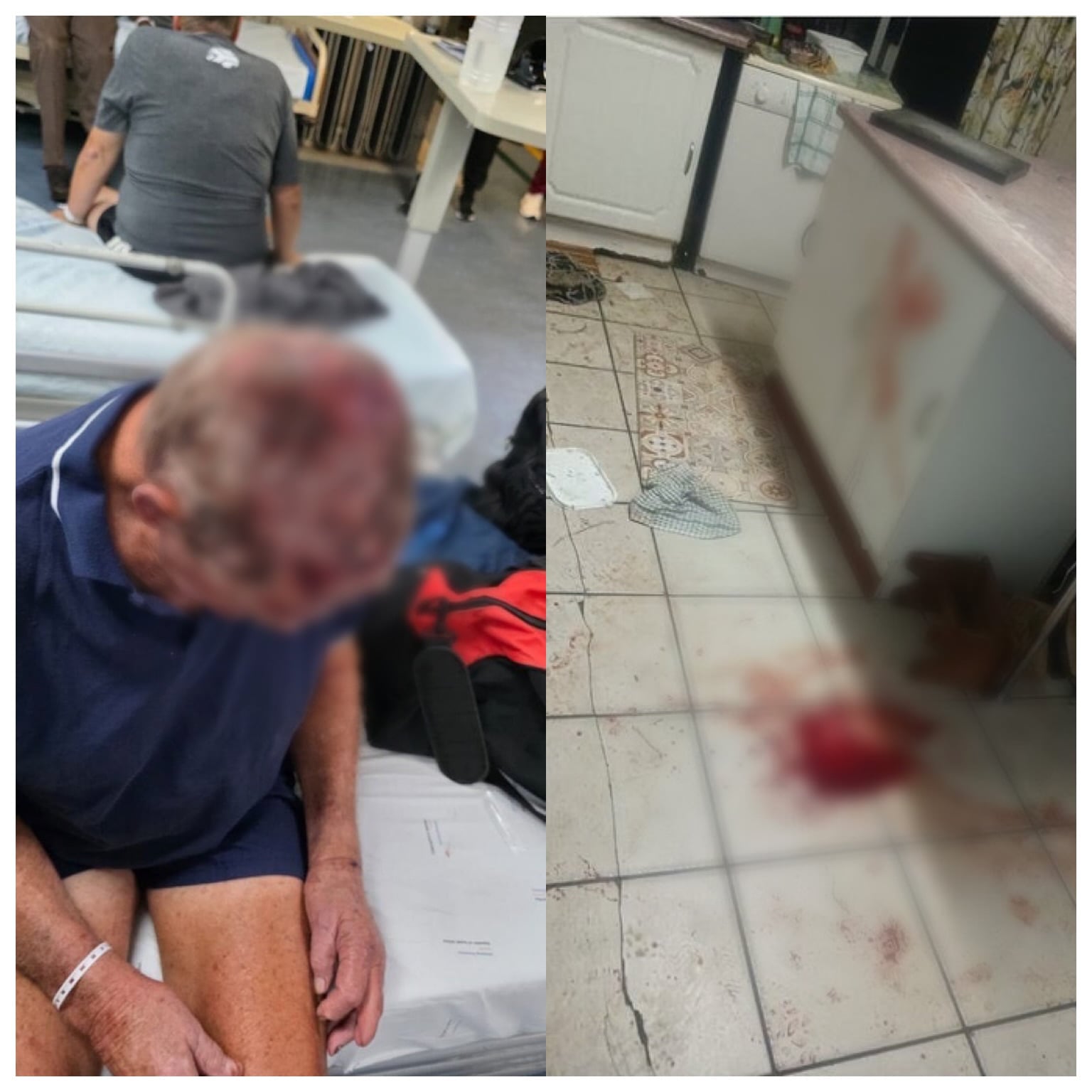
An overnight raid on a smallholding outside Pretoria, during which an elderly man was pistol-whipped and strangled into unconsciousness in his own kitchen, has pushed the long-running and bitterly polarised question of rural violence in South Africa back into international view. Trompie Kruger, 76, survived. The argument his survival has reignited — about who is being targeted, by whom, and with what political encouragement — shows no sign of being resolved, according to Britannia Daily.
What happened at the Kameeldrift smallholding
Shortly after 11pm on the night of the attack, five armed men are reported to have forced entry to the Kruger property in Kameeldrift East, a belt of smallholdings on the outskirts of Pretoria long associated with repeated incidents of violent crime, according to Britannia Daily. According to accounts circulated by crime journalist Yusuf Abramjee and subsequently corroborated by sources close to the family, the intruders restrained at least one occupant with cable ties as they moved through the house. Kruger’s wife managed to lock herself inside a bedroom and took refuge in the bathroom.
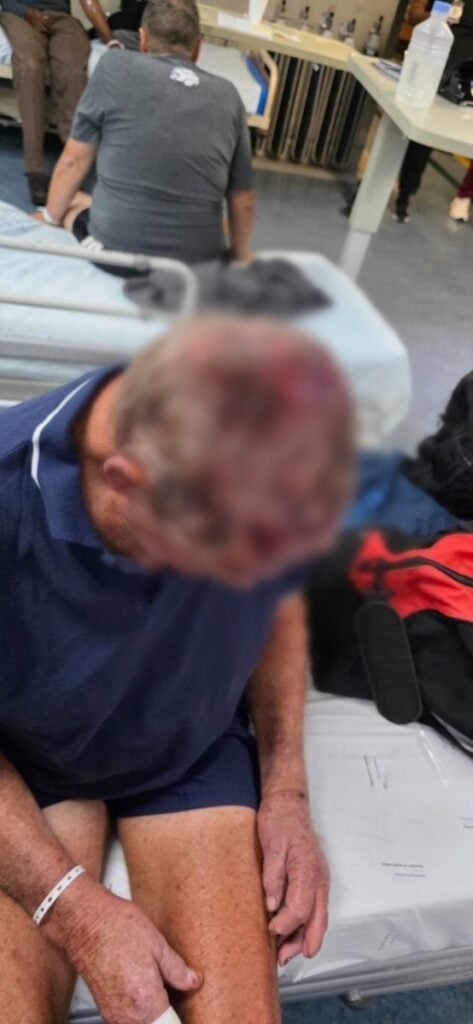
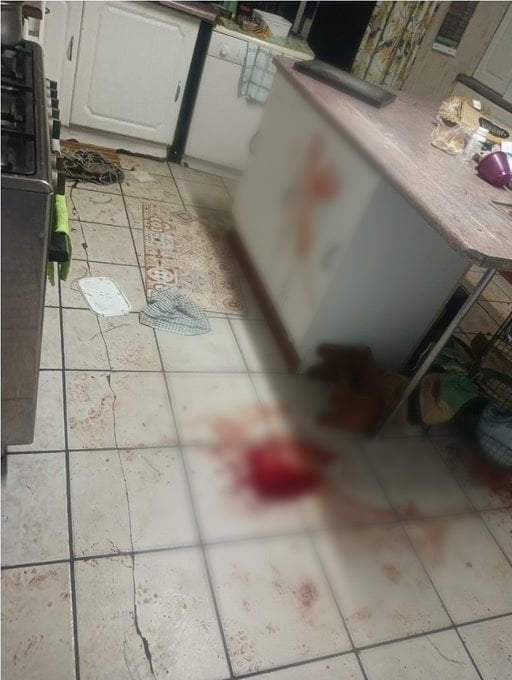
The confrontation escalated in the kitchen, where the attackers overpowered the elderly homeowner. He was struck repeatedly about the head with a 9mm handgun and choked until he passed out. He was later treated for severe head wounds, with his injuries requiring in excess of 17 stitches to close, according to Britannia Daily. A subsequent joint operation involving the South African Police Service, neighbourhood farmers and private security firms is reported to have led to the arrest of 13 suspects within hours, though police have not publicly confirmed the full details.
News of the assault travelled quickly on social media. Some users, accustomed to disinformation around such incidents, initially questioned whether it had taken place at all; acquaintances of the family subsequently confirmed it had.
Why a single assault has ignited a wider argument
The attack has landed in an unusually charged environment. Since the Oval Office confrontation last May, when Donald Trump publicly accused the South African government of tolerating what he described as a systematic campaign against white farmers, Pretoria has been at pains to dispute the framing. Government officials and independent researchers have consistently argued that there is no statistical basis for describing rural killings as a targeted genocide, pointing out that commercial farmers account for a tiny fraction of the roughly 20,000 murders recorded across the country each year, and that the victims of farm violence also include Black farmworkers and their families.
That position, however, sits uneasily alongside data compiled by civil-society groups such as AfriForum and the Transvaal Agricultural Union, which have stepped in to document rural crime since the police stopped treating farm attacks as a distinct category in 2007. AfriForum’s latest annual audit, released this week, recorded 184 attacks and 29 murders on South African farms and smallholdings in 2025, according to Britannia Daily. While the murder tally was down on the 37 killings logged the previous year, the organisation’s head of community safety, Jacques Broodryk, argued that the severity of the violence had if anything intensified: roughly 36 per cent of incidents were classified as involving conduct carrying a substantial risk of death, including cases of torture, sexual assault and prolonged beatings.
Gauteng — the province containing Pretoria — again registered the highest absolute numbers, with 50 attacks and seven fatal incidents. Data from the opening months of 2026 so far suggest no material improvement, with activist trackers logging roughly a dozen attacks in January alone and up to 27 in March, according to Britannia Daily. More than half of the 2025 victims whose ages were recorded were over 61, a detail that gives the Kruger case an uncomfortable resonance.
A chant, a statistic, and a fractured national conversation
Weaving through all of this is the continued public performance of Dubul’ ibhunu — “Shoot the Boer” — by Julius Malema, leader of the Economic Freedom Fighters. Malema and his supporters defend the chant as an anti-apartheid struggle song, historical in character, devoid of literal intent; a Supreme Court of Appeals ruling in 2024 broadly accepted that framing. Afrikaner groups, and many rural communities, view it very differently, arguing that its repeated airing at rallies — reported as recently as this month — amounts to the normalisation of incitement against a specific community, according to Britannia Daily. Malema’s sentencing in a separate firearm-related matter has been proceeding in parallel at the East London Magistrate’s Court this month, keeping him at the centre of national attention.
The statistical weight of the argument is genuinely contested. Independent trackers place the cumulative number of farm murders since the end of apartheid in 1990 at somewhere between 2,000 and 2,300, with victims disproportionately white — a reflection, in part, of the continued racial skew in commercial land ownership, according to Britannia Daily. Academics and officials counter that, as a share of total homicides, these figures are small, and that crime in South Africa is largely driven by opportunism rather than ideology.
Neither framing fully captures the texture of a case like Kameeldrift East. For the Kruger family, and for the wider farming community in Pretoria’s outer reaches, the debate over classification has long since been outpaced by the arithmetic of alarms, fences and response times. Whether this latest assault eventually enters the statistical record as a “farm attack”, an “aggravated house robbery” or simply another night of South African crime, it has already fed a narrative that neither the government’s denials nor Malema’s legal victories have been able to contain.
