


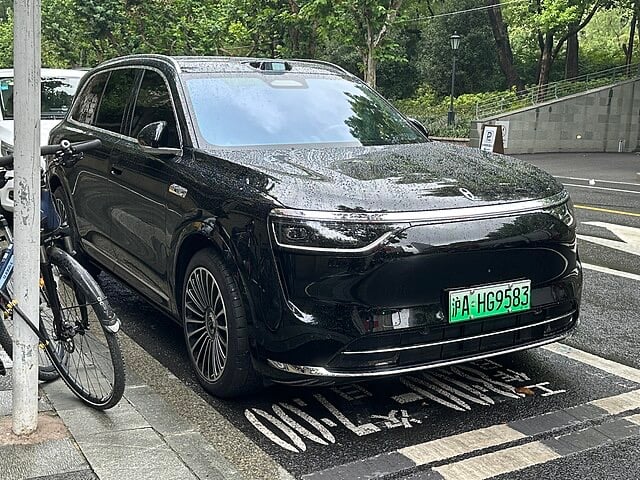
A Chongqing-based automobile manufacturer has secured intellectual property protection for an under-seat lavatory system designed to permit motorists to relieve themselves during extended journeys without leaving their vehicles—the latest example of how cutthroat competition within China’s saturated electric vehicle market is driving manufacturers toward increasingly unconventional cabin amenities as conventional differentiation strategies prove insufficient to capture consumer attention.
Seres’ 10 April patent filing with China’s intellectual property administration describes an “in-vehicle toilet” that emerges from beneath passenger seating through either manual activation or voice commands, featuring integrated ventilation systems channelling odours externally via exhaust pipes whilst a rotating heating element evaporates urine and desiccates solid waste within a manually-emptied collection tank that engineers claim maximises interior space utilisation without requiring additional cabin volume.
The automaker, which operates the Aito subsidiary brand focusing on electric sport utility vehicles sold primarily across mainland China alongside expanding European, Middle Eastern and African markets, has not announced production plans or identified specific models that would incorporate the lavatory technology—leaving uncertain whether the patent represents genuine product development or merely defensive intellectual property positioning preventing competitors from pursuing similar concepts.
“The feature is meant to satisfy users’ toilet needs on long journeys, while camping or while staying in the car,” engineers stated in the filing, positioning the amenity as addressing practical requirements for motorists undertaking extended highway travel or utilising vehicles as temporary accommodation rather than merely novelty garnering publicity through its inherent absurdity.
Why Chinese EV Makers Resort to Extreme Differentiation Tactics
The in-vehicle toilet concept exemplifies the escalating amenity arms race consuming Chinese electric vehicle manufacturers confronting market saturation that has triggered brutal price competition eroding profit margins across an industry where dozens of brands vie for consumer preference through features extending far beyond conventional automotive engineering priorities.
Built-in massage seats, karaoke systems, refrigerators and elaborate infotainment packages have become standard differentiation tools as automakers concluded that battery range, acceleration performance and autonomous driving capabilities alone prove insufficient to distinguish products when competitors rapidly replicate any technological advantages. The progression toward lavatory installation represents logical if extreme extension of this dynamic: if rivals match entertainment and comfort features, manufacturers must identify needs that conventional automobiles leave unaddressed regardless of how niche or unusual such requirements appear.
The strategy reflects particular pressures within Chinese domestic market where government industrial policy encouraging electric vehicle adoption combined with substantial manufacturing capacity has produced supply vastly exceeding demand at price points generating sustainable profitability. Analysts have repeatedly warned that numerous Chinese EV firms face imminent collapse as the price war initiated by industry leader BYD forces smaller manufacturers to choose between maintaining prices that ensure losses on each unit sold or slashing costs to levels triggering bankruptcy through unsustainable cash burn.
Seres numbers amongst the minority of Chinese electric vehicle companies achieving profitability—a distinction suggesting either superior operational efficiency or successful market positioning that commands premium pricing despite intense competitive pressures. Whether onboard lavatories contribute to such positioning or represent desperation measure acknowledging that conventional differentiation avenues have been exhausted remains subject to interpretation that production decisions will ultimately clarify.
What the Patent Reveals About Technical Implementation Challenges
The filing’s technical specifications illuminate engineering complexities inherent in transforming passenger seating into functional lavatory whilst maintaining cabin aesthetics and avoiding the sanitation hazards that inadequate waste management would create. The slide-out mechanism must operate reliably across thousands of activation cycles whilst supporting adult bodyweight, the ventilation system must eliminate odours sufficiently that other occupants remain comfortable, and the heating element must process waste completely enough that manual tank emptying occurs infrequently despite the limited storage capacity that under-seat installation permits.
The voice-activated deployment suggests integration with broader vehicle control systems enabling occupants to summon the toilet without manual manipulation—a convenience that also creates potential for embarrassing accidental activations if voice recognition proves insufficiently discriminating between intentional commands and casual conversation mentioning relevant keywords. The concealment beneath standard seating when not deployed addresses aesthetic concerns whilst maximising usable cabin volume, yet raises questions about cleaning accessibility and whether the mechanism’s complexity justifies the convenience relative to simply stopping at roadside facilities during lengthy journeys.
Historical precedent exists for automotive lavatories beyond the long-distance coaches where such amenities remain standard: a 1950s Rolls-Royce Silver Wraith special edition incorporated television and under-seat toilet according to Sotheby’s auction documentation, demonstrating that luxury manufacturers have periodically explored onboard sanitation despite such features never achieving mainstream adoption even amongst premium brands where cabin space and customer budgets theoretically accommodate unconventional amenities.
The fact that in-vehicle toilets essentially disappeared from automobile design for seven decades before Chinese EV competition revived the concept suggests either that previous implementations failed to deliver value justifying their costs and complexity, or that contemporary manufacturing capabilities and changing consumer preferences create conditions where features that proved impractical historically might succeed when reintroduced through modern engineering approaches and materials.
Whether Seres’ patent translates into production vehicles, whether competitors pursue similar technologies if the concept gains market traction, and whether Chinese consumers actually desire onboard lavatories sufficiently to pay premium pricing that such features would command all remain unanswered questions that only market testing can resolve. For now, the patent serves primarily as illustration of how thoroughly saturated markets drive manufacturers toward differentiation strategies that earlier automotive eras would have dismissed as absurd yet which increasingly desperate competitive dynamics render worth serious consideration when conventional approaches to product distinction have been exhausted through relentless imitation.
