


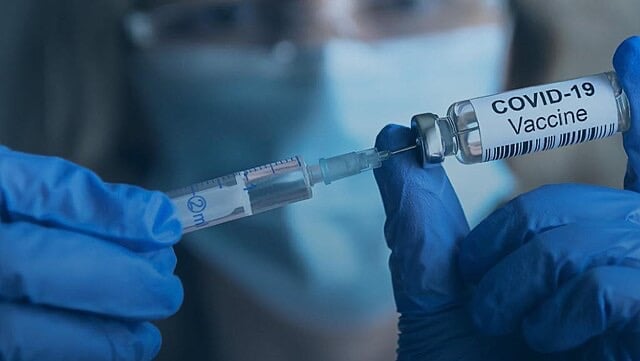
The official pandemic inquiry delivered starkly contradictory assessments Thursday of Britain’s Covid response by celebrating vaccine development and deployment as showcasing “the best attributes of the UK’s health and scientific systems” whilst simultaneously condemning as “not sufficiently supportive” a compensation scheme that has paid out to just one percent of the 20,000-plus people claiming serious jab-related harm.
Baroness Hallett’s 274-page fourth report—examining treatments and vaccines rather than the governmental dysfunction that previous instalments savaged—praised the unprecedented achievement of administering approximately 130 million doses within a single year whilst immunising more than nine in ten people aged over 12. Yet the acknowledgment that vaccination represented historic public health triumph coexists uneasily with findings that predictable hesitancy received inadequate mitigation, that misinformation spread unchecked whilst eroding broader vaccine confidence, and that rare cases of serious injury confronted bureaucratic obstacles denying compensation to 99 percent of applicants.
The Vaccine Damage Payment Scheme, which caps one-off tax-free awards at £120,000—a level frozen since 2007 despite inflation substantially eroding purchasing power—demands applicants demonstrate disability severity of at least 60 percent. The inquiry concluded this threshold “does not work effectively for Covid vaccines” whilst the payment ceiling requires raising “at least in line with inflation” alongside introduction of graduated compensation reflecting varying injury severity rather than flat-rate awards regardless of harm extent.
Long-term health problems caused by Covid vaccines occurred rarely, the report acknowledges, yet “there was a small group for whom vaccines did cause serious injury or death”—a formulation validating concerns that vaccine sceptics amplified whilst contextualising risk within framework where jab benefits vastly exceeded dangers for overwhelming majorities. That individuals who suffered genuine vaccine-related harm—a sacrifice made whilst responding to governmental urgings that vaccination represented civic duty protecting vulnerable populations—confront assessment processes rejecting 99 percent of claims suggests either systematic misattribution of unrelated conditions to vaccination, or criteria so restrictive that genuine injuries face denial through bureaucratic obstacles.
What the Inquiry Found About Development Speed and Deployment Innovation
The vaccination programme’s scale and velocity proved unprecedented: processes normally requiring years of research and clinical trials compressed into months without compromising safety or regulation according to inquiry assessment. Once available, doses reached arms with efficiency that pop-up clinics in community centres and faith settings exemplified—innovations addressing hesitancy through partnerships with local religious and community leaders who possessed trust that central government messaging could not command.
The authorities’ willingness to adapt delivery mechanisms beyond traditional NHS facilities demonstrated recognition that standard approaches would fail reaching populations whose historical experiences with medical institutions or government programmes generated scepticism that generic communications could not overcome. Yet the inquiry notes these targeted interventions arrived belatedly, after disparities in uptake amongst ethnic minorities and deprived communities had already generated preventable deaths that earlier deployment of community-focused strategies might have averted.
The achievement “showcased many of the best attributes of the UK’s health and scientific systems,” Hallett stated—praise that previous inquiry reports criticising pandemic preparations, governmental decision-making, and NHS readiness notably withheld. The fourth instalment’s more positive tone reflects subject matter where British performance genuinely excelled: vaccine development through research institutions and pharmaceutical partnerships, regulatory approval processes that accelerated without abandoning safety standards, and logistical deployment mobilising healthcare workers and volunteers at unprecedented scale.
Why Mandates and Misinformation Undermined Trust That Rebuilding Requires
The report questions whether government overreached when mandating vaccination for care home workers in June 2021 before extending requirements to all health and care staff—a policy subsequently scrapped before full implementation once evidence emerged that jabs provided limited protection against infection transmission despite substantial benefits preventing serious illness amongst vaccinated individuals.
“Vaccine mandates are likely to have contributed to alienation and increased hesitancy,” the inquiry warns, suggesting coercive approaches proved counterproductive by hardening opposition amongst initially undecided populations who resented governmental compulsion. The care home mandate’s abandonment amid mounting evidence about limited transmission prevention reflects how rapidly evolving scientific understanding during pandemic emergencies complicated policymaking that necessarily proceeded based on incomplete data yet generated resistance when subsequent evidence undermined initial justifications.
Misinformation spread online about vaccines during the pandemic “both damaged uptake of the Covid jab and has subsequently affected confidence more generally in childhood vaccines that have nothing to do with Covid,” the inquiry states—identifying cascading consequences extending beyond immediate pandemic response into routine immunisation programmes now confronting heightened scepticism. High levels of distrust in authority within certain communities including ethnic minority groups and people living in deprived areas represents additional factor requiring sustained attention beyond addressing false information circulation.
“More must be done to rebuild trust in all vaccines,” the inquiry concludes without providing detailed guidance about how to achieve such restoration when social media platforms enabling misinformation spread operate beyond governmental control whilst populations prove increasingly resistant to official messaging they perceive as propaganda. The erosion of broader vaccine confidence represents arguably the pandemic response’s most damaging long-term legacy: interventions that saved lives during Covid emergency may ultimately cost lives through reduced childhood vaccination rates protecting against measles, mumps, rubella and other diseases whose control depends on maintaining population immunity thresholds.
The inquiry’s observation that both misinformation and mandates undermined trust creates tension: if coercive measures generated alienation whilst false information spread unchecked, the question of how to achieve high vaccination rates during future health emergencies without either compulsion or tolerance of dangerous misinformation remains unresolved through findings that identify problems more successfully than solutions.
The Dexamethasone Success Story That Report Nearly Overlooks
Much of the report’s focus centres on vaccines yet Hallett identifies a cheap steroid drug already widely available as potentially the “single-most important treatment to have been used during the pandemic”—an assessment suggesting that therapeutic interventions deserve recognition comparable to vaccination programme whilst receiving fraction of public attention or political credit.
Dexamethasone’s deployment within first pandemic months provides illustration of research excellence: UK researchers rapidly identified that the drug proved effective reducing immune system over-reactions in Covid patients that led to fatal lung damage. Hospitals began administering it in June 2020 within hours of trial results being confirmed and shared globally—speed demonstrating that when evidence clearly established treatment efficacy, implementation could proceed with velocity matching vaccine development timelines.
By March 2021, dexamethasone had saved an estimated 22,000 lives in the UK and one million globally—mortality reduction achieved through repurposing existing medication rather than developing novel therapeutics requiring extensive research and regulatory approval. The contrast between dexamethasone’s rapid adoption based on clear trial evidence and vaccine mandates that persisted despite mounting evidence of limited transmission prevention illustrates how policy responsiveness to evolving science proved inconsistent across different pandemic interventions.
The inquiry’s characterisation of treatment identification as among pandemic response “key successes” alongside vaccine rollout suggests that British research institutions and clinical trial infrastructure performed exceptionally when asked to determine what worked against the virus—a capacity that the report implies deserves recognition comparable to the vaccination programme that has dominated pandemic retrospectives whilst overshadowing equally important therapeutic advances.
Whether the fourth report’s more positive tone compared to previous instalments that condemned governmental preparations and decision-making represents genuine turning point acknowledging pandemic response successes alongside failures, or merely reflects that vaccine development and treatment identification proved easier to execute competently than broader governance challenges, will become clearer as remaining reports address procurement scandals, test-and-trace dysfunction, and societal impacts where preliminary evidence suggests the inquiry will return to its characteristic critical mode.
For individuals suffering serious vaccine injury whilst confronting compensation scheme rejecting 99 percent of claims, Hallett’s call for urgent reform offers validation yet no guarantee of action. For communities whose predictable hesitancy received belated attention after preventable deaths had already occurred, the praise for eventual community partnerships arrives as epitaph rather than remedy. And for a nation still processing pandemic trauma whilst confronting eroded vaccine confidence threatening future public health, the report’s mixed messages encapsulate the complexity of assessing interventions that saved countless lives yet left substantial casualties whose suffering the triumphalist narratives about vaccination success inadequately acknowledge.
