


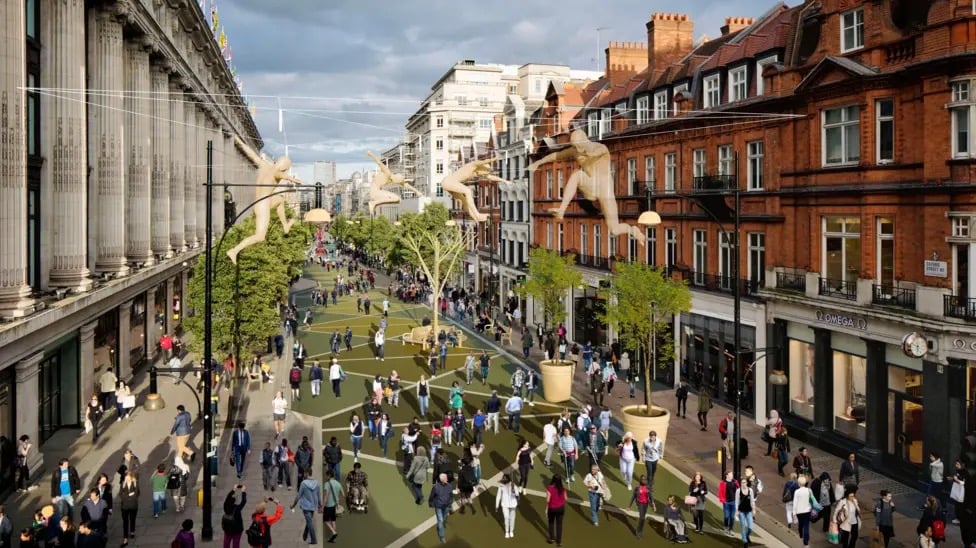
London’s mayor Sir Sadiq Khan has given final approval to pedestrianise Oxford Street’s core retail stretch, instructing Transport for London to implement the traffic-removal proposals. Here’s what you need to know about the changes.
Which Part of Oxford Street Is Being Pedestrianised?
The targeted section, commonly described as Oxford Street West or the core retail stretch, runs between Great Portland Street and Orchard Street. This covers the Oxford Circus to Marble Arch corridor, encompassing the street’s main shopping district.
When Will Changes Begin?
Traffic removal is expected to begin in summer 2026, with works continuing until late 2027. Some reporting indicates a temporary scheme will be implemented first, followed by a permanent plan after further consultation. Initial changes are targeted for this year with full works beginning in summer, though exact dates should be treated as targeted timelines pending official TfL confirmation.
What Traffic Will Be Banned?
The pedestrianised stretch will be closed to:
- Buses
- Taxis and private-hire vehicles
- Bikes
- E-scooters
- Pedicabs
- Private motorised vehicles
Service and delivery vehicles will be allowed limited overnight access for servicing and deliveries. General traffic already faces restrictions between 07:00 and 19:00 Monday to Saturday, which will become permanent round-the-clock bans.
Where Will Buses Be Rerouted?
Buses currently serving Oxford Street will be diverted along Wigmore Street and Henrietta Place, with new stops and shelters installed along these alternative routes. Route 390 has been mentioned as an example of services using Wigmore Street and Henrietta Place with new bus stop locations.
TfL calculates increased journey times will be “less than a minute.” New bus stops, taxi ranks and drop-off locations will be created as close to the pedestrianised area as possible.
What About Cycling?
Cycling will not be permitted in the pedestrianised stretch. TfL will create new cycle routes to compensate for Oxford Street’s closure to cyclists.
What Changes For Pedestrians?
New and wider pedestrian crossings will be installed. The transformation aims to create “a global leader for shopping, leisure and outdoor events” competing with cities like Paris and New York, making the area safer and more enjoyable for visitors.
What About Disabled Access?
Blue badge parking bays, drop-off points and step-free access measures are expected in the area, though precise details from official documents require confirmation. Some local residents previously expressed concerns about disability access when opposing the changes.
What Was The Public Response?
An earlier consultation closing 2 May 2025 received over 6,000 responses, with “around two thirds” supportive of pedestrianisation in principle. A later second consultation on local traffic diversions received 2,700+ responses, with City Hall stating the majority agreed with the plans.
Who Supports The Changes?
Major retailers including Selfridges and John Lewis have expressed support for the transformation. The Mayor established the Oxford Street Development Corporation, which held its first board meeting in January 2026, to oversee the project.
Who Opposes The Changes?
Taxi trade groups have raised concerns about the impact on their operations. Some local residents oppose the changes, citing worries over traffic displacement, bus diversions and disability access. Westminster City Council previously opposed pedestrianisation plans.
What Is Westminster Council’s Position Now?
Council leader Adam Hug stated: “Over the last 18 months we have secured a number of key improvements from the mayor of London’s original plans to ensure that the proposals for Oxford Street are more deliverable and better meet the needs of local residents, businesses, and wider London.”
The council confirmed its role is now ensuring the transformation works for local communities. Westminster secured retention of bus access for Oxford Street East and strategic development funding.
Why Can This Happen Now When Previous Attempts Failed?
The project uses a Mayoral Development Corporation model, giving the Mayor and City Hall more control than earlier attempts blocked by local authority objections. The Oxford Street Development Corporation structure provides the governance framework enabling implementation despite previous Westminster Council opposition.
What Will Be Monitored?
TfL will continue monitoring the impact of changes as they are made and will “consider whether any further revisions are appropriate” as the scheme progresses through its temporary and permanent phases.
What Is The Overall Aim?
Khan stated: “I am delighted to be moving forward with my bold vision to transform Oxford Street into a world-leading urban space for shopping, leisure and outdoor events.” The project aims at “building a better more prosperous London for everyone.”
Alex Williams, TfL’s chief customer and strategy officer, confirmed they would work closely with Westminster City Council to implement the changes. More details will be outlined in coming days as the summer 2026 start date approaches.
