


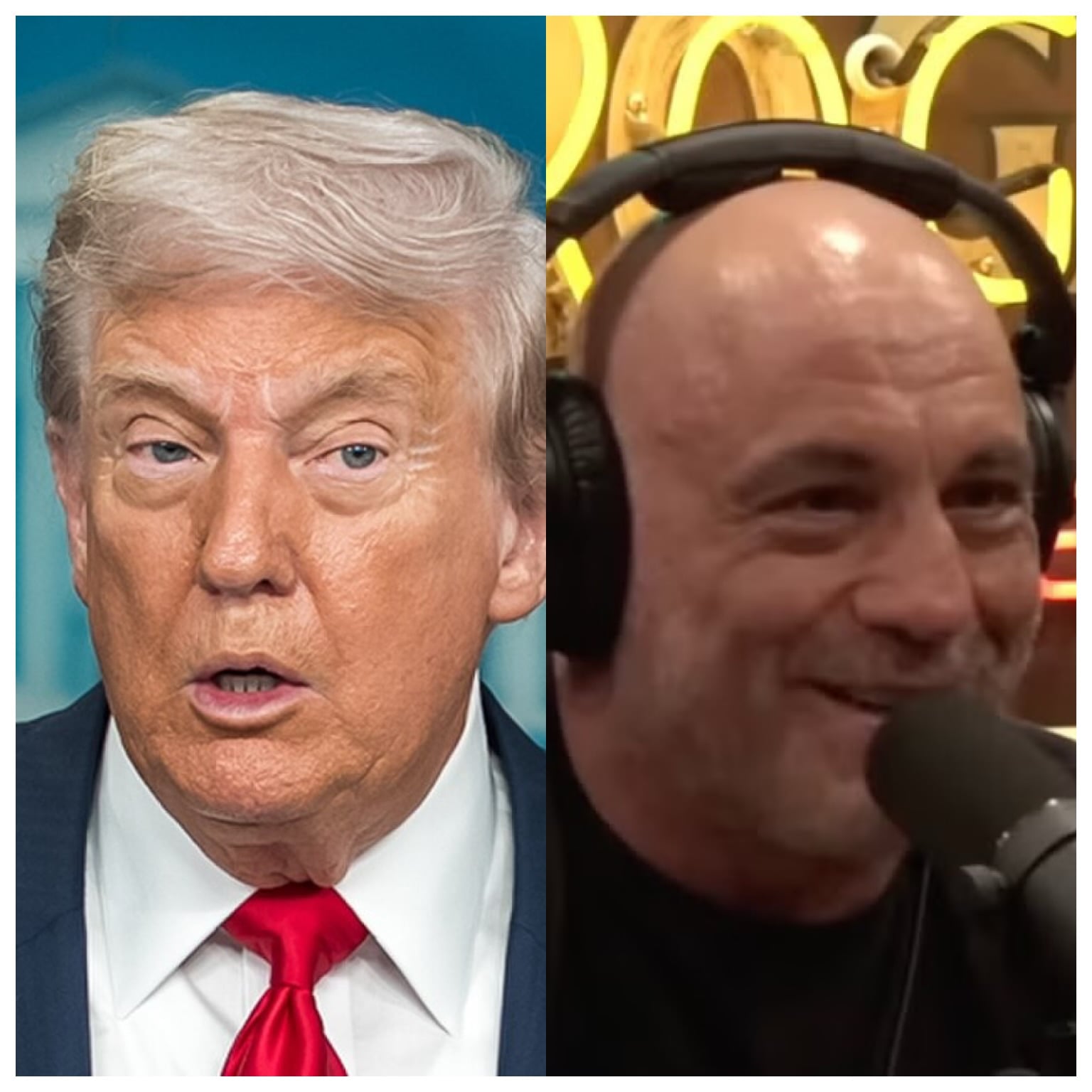
The unraveling of President Donald Trump’s broader coalition beyond his committed MAGA base accelerated this week when Joe Rogan—the podcaster whose 2024 endorsement helped legitimise Trump among younger male voters sceptical of traditional Republican messaging—publicly speculated that the Iran war serves primarily to distract Americans from recently released documents detailing the president’s historical association with convicted sex offender Jeffrey Epstein.
Rogan’s Wednesday podcast remarks to guest Arsenio Hall marked his most explicit break yet with an administration he initially supported, weaving together conspiracy theory about deliberate misdirection with substantive criticism of military strategy and scathing contempt for Trump’s core supporters. “Look, the Epstein files comes out — we go to war with Iran. It’s a good way to get people to stop talking about certain things,” Rogan stated. “You give them a new problem to think about.”
The timing theory—however speculative—resonates within segments of Trump’s 2024 coalition now questioning whether campaign promises to “end these stupid, senseless wars” represented genuine conviction or electoral positioning. Rogan’s platform reaches audiences largely beyond traditional conservative media ecosystems, making his defection potentially more consequential than criticism from establishment Republican figures whose influence over younger, politically heterodox voters has long since evaporated.
The podcaster’s trajectory from November endorsement through March denunciation illustrates the volatility of support Trump assembled outside his reliable MAGA base—a coalition built on specific policy promises and cultural positioning rather than deeper ideological alignment or personal loyalty to the president himself.
What Rogan’s Epstein-Iran Theory Reveals About Information Fragmentation
The conspiracy framework Rogan articulated draws parallels to former President Bill Clinton’s 1999 Yugoslavia bombing campaign, which critics at the time characterised as convenient distraction from the Monica Lewinsky scandal. Whether historically accurate or not, the comparison establishes narrative pattern where presidents deploy military force to shift media attention from domestic political vulnerabilities—a theory that finds purchase among audiences predisposed toward institutional scepticism.
Trump’s documented friendship with Epstein prior to the financier’s 2008 conviction for soliciting prostitution from a minor has generated sustained scrutiny, though the president faces no criminal charges related to Epstein’s activities and claims to have severed ties long before the conviction. The release of additional documents detailing their historical association nonetheless created political exposure that Rogan suggests the Iran campaign conveniently eclipsed.
The theory’s plausibility matters less than its circulation within influential media spaces reaching demographics critical to Trump’s electoral mathematics. Rogan’s audience—predominantly male, younger than traditional Republican voters, culturally libertarian rather than socially conservative—provided crucial margin in 2024 swing states. Their disaffection cannot be dismissed as irrelevant fringe dissent when these same voters enabled Trump’s return to office.
Rogan’s criticism extends beyond conspiracy speculation into substantive military strategy concerns. During his 11 March podcast, he warned that “Operation Epic Fury” risked triggering World War III whilst questioning whether a 79-year-old president might act recklessly because he “doesn’t have much to lose.” The age-based critique—”You’re making decisions for babies and children and the future of the world, and you’ve only got 10, maybe 10 years left on Earth if everything goes great”—represents argument Trump’s own supporters deployed against Joe Biden during 2024’s campaign.
Why MAGA Base Loyalty Cannot Compensate for Broader Coalition Fracture
The polling divergence between Trump’s committed MAGA supporters—who overwhelmingly back the Iran campaign—and broader conservative-leaning voters like Rogan illuminates the strategic challenge facing the administration. Whilst core base enthusiasm remains intact, the expansion voters who delivered 2024’s victory expressed support conditional on specific policy outcomes rather than unconditional personal loyalty.
Rogan articulated this fracture with particular venom during his 26 March podcast, dismissing Trump’s signature slogan whilst attacking his most devoted followers. “Make America Great Again sucks,” Rogan declared. “America is great.” He then characterised MAGA as “a movement of a bunch of f****** dorks because a lot of them are dorks. A lot of them these really weird, f****** uninteresting, unintelligent people that have got something they cling to.”
The outburst—distinguishing “genuine patriots” from adherents he portrays as unintelligent zealots pursuing Biblical end-times prophecies—reflects broader tension within right-leaning coalitions between traditional conservatives, libertarians, and populist nationalists united by opposition to progressive cultural politics but divided on fundamental questions of governance, foreign policy, and acceptable leadership behaviour.
Trump’s 2024 success depended on assembling this fractious coalition through strategic ambiguity on divisive issues and explicit promises to avoid military entanglements. The Iran campaign—whatever its strategic merits—directly contradicts those assurances, forcing voters like Rogan to reconcile campaign rhetoric with governing reality. His resolution appears to involve concluding he was misled rather than that circumstances changed, framing the disconnect as betrayal rather than evolution.
“This is why a lot of people feel betrayed, right? He ran on ‘no more wars,’ ‘end these stupid, senseless wars,’ and then we have one that we can’t even really clearly define why we did it,” Rogan stated during his March podcast. The critique echoes complaints from anti-interventionist conservatives who supported Trump specifically because they believed he represented departure from perpetual Middle Eastern military engagement.
The administration faces strategic dilemma: maintaining MAGA base enthusiasm through aggressive action risks alienating the broader coalition required for governing legitimacy and 2028 Republican prospects. Yet moderating to retain figures like Rogan potentially deflates core supporters whose enthusiasm drives grassroots organisation and small-donor fundraising essential to Republican electoral machinery.
Trump’s historical pattern involves prioritising base loyalty over coalition expansion, calculating that enthusiastic supporters deliver more value than ambivalent allies. Whether that formula succeeds depends partly on whether conflicts like Iran generate “rally round the flag” dynamics that override specific policy objections, and partly on whether Democratic opposition can capitalise on conservative fractures without alienating their own anti-war constituencies.
For now, Rogan’s defection signals that Trump’s hold on the eclectic coalition that returned him to office may prove more tenuous than MAGA rally attendance suggests—a warning that governing involves maintaining support from voters whose loyalty depends on policy delivery rather than personal attachment to a movement they increasingly view with contempt.
