


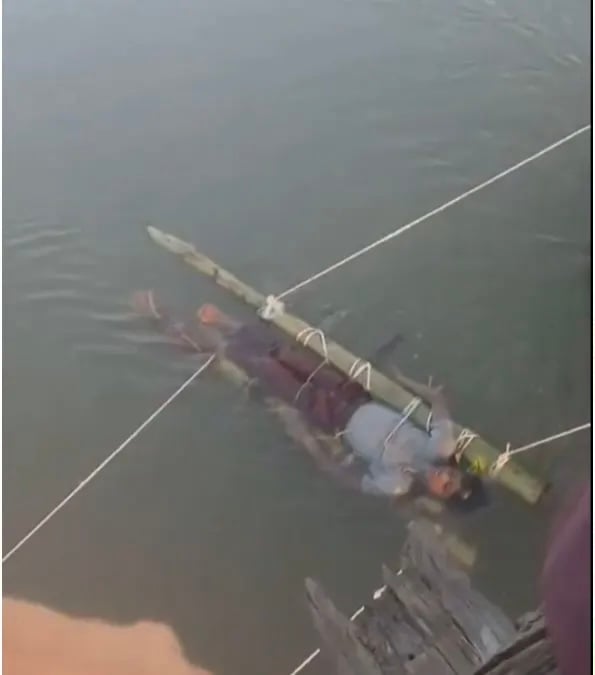
A viral video showing a teenager’s final hours tied to a bamboo raft in the Ganga River has sparked widespread outrage across India, as authorities investigate a case where superstition replaced emergency medical care following a snake bite.
The 14-year-old from Amroha district in Uttar Pradesh died after his parents sought the guidance of a tantrik—a traditional healer—rather than hospital treatment when the boy was bitten by a snake. The practitioner instructed the family to immerse their son in the sacred river for half a day, claiming the water would extract the venom from his body.
A Deadly Prescription
Footage circulating on social media platforms shows the unresponsive teenager secured to a makeshift bamboo platform, which had been lowered into the water using ropes. Onlookers gathered along the riverbank throughout the ordeal, waiting to witness what they believed would be a miraculous recovery through the river’s purifying properties.
According to local beliefs that persist in some rural communities, the Ganga’s waters possess the power to draw out snake poison from victims. The superstition prompted the boy’s family to follow the tantrik’s instructions rather than seek conventional medical intervention that could have saved his life.
After 12 hours submerged in the river, the teenager showed no signs of improvement. He subsequently died from the untreated snake bite, an outcome medical professionals say was entirely preventable with timely anti-venom treatment.
Public Fury and Calls for Accountability
The incident has ignited fierce debate about the dangers of blind faith and the continued influence of unqualified practitioners in areas where access to education and healthcare remains limited. Social media users expressed horror at the tragedy, with many demanding legal action against both the tantrik and the boy’s parents.
One commenter wrote: “Absolutely heartbreaking. It is so sad that these fake tantriks are still playing with the emotions and blind faith of helpless people. A young life was lost which could have easily been saved. We seriously need much more awareness at the ground level to avoid such tragic incidents. In emergencies, medical help should always be the first and only step.”
The case has drawn attention to the broader challenge facing Indian authorities in combating harmful superstitions that continue to claim lives, particularly in rural areas where traditional beliefs sometimes override modern medical knowledge. Snake bites remain a significant public health concern across India, with thousands of deaths reported annually—many of which could be prevented through prompt medical treatment with anti-venom.
