


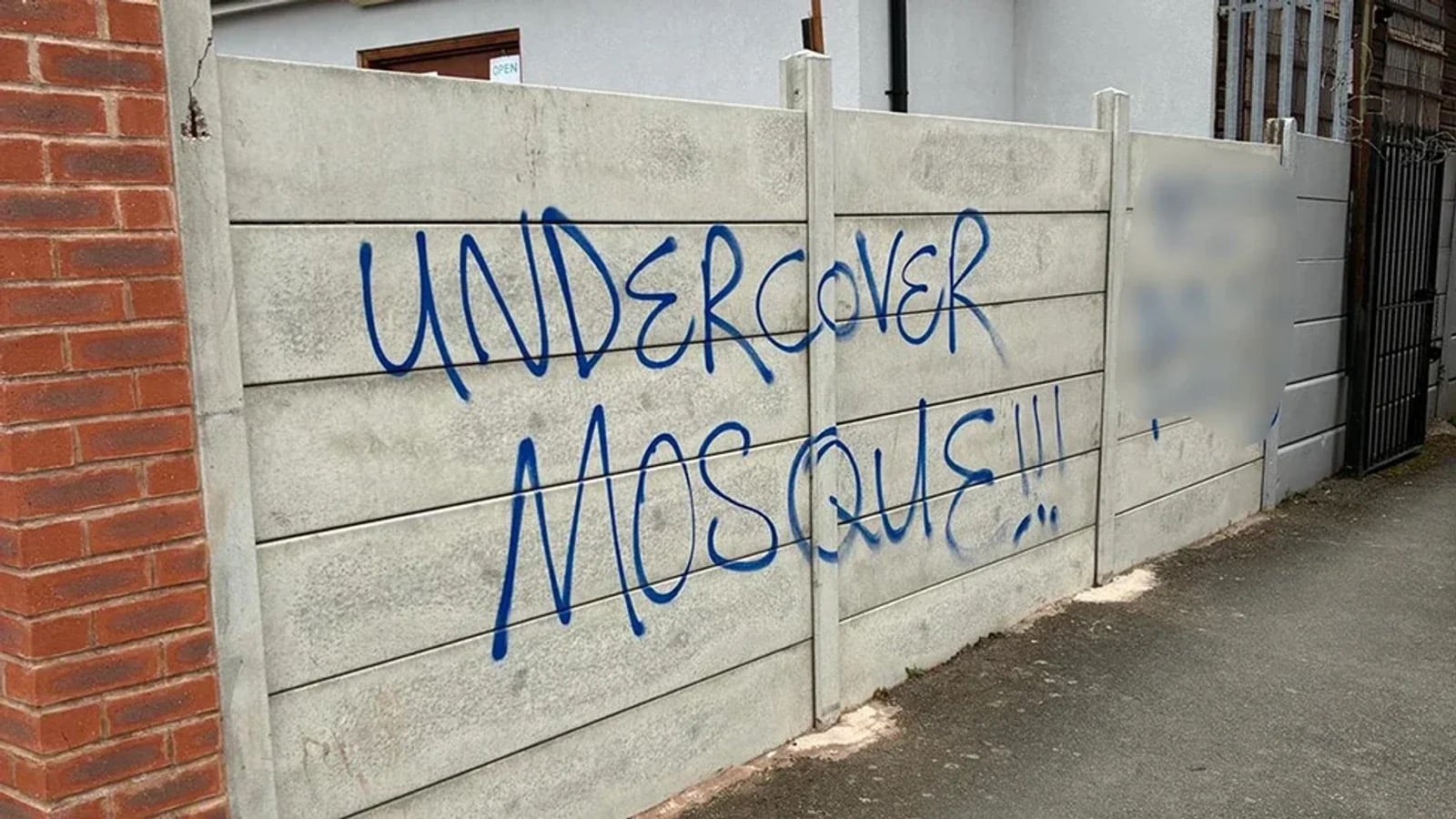
A Birmingham mosque has been targeted with racist graffiti in two separate attacks within 48 hours, prompting police to increase patrols and community leaders to convene an emergency meeting amid growing fears for worshippers’ safety. The Jami Community and Education Centre in Kingstanding has faced a sustained campaign of vandalism, with the slur “terrorists” painted on its walls and windows smashed in incidents that authorities are treating as racially and religiously aggravated criminal damage.
The escalating pattern of attacks has left congregation members feeling vulnerable, according to local representatives who gathered on Wednesday alongside police and council officials to address the crisis. West Midlands Police have launched an investigation and are reviewing CCTV footage whilst conducting door-to-door enquiries, though no arrests have yet been made.
A pattern of escalating intimidation
The Jami Community and Education Centre on Kettle Road was first targeted in the early hours of Wednesday, when vandals painted racist graffiti on the building’s exterior walls. A second attack followed on Friday, continuing what volunteer Khalid Hussein described as a deliberate campaign to intimidate worshippers and disturb the local neighbourhood.
The mosque had already suffered damage approximately two weeks earlier when windows at the premises were smashed, suggesting a sustained targeting rather than isolated incidents. “Our mosque has been under attack – they are not isolated incidents,” Mr Hussein told the BBC, emphasising the pattern of vandalism facing the centre.
West Midlands Police confirmed they are treating the vandalism as hate crime due to the nature of the graffiti and the targeting of a religious institution. Officers have increased patrols in the surrounding area and urged anyone with relevant footage, including CCTV, dashcam or doorbell video recordings, to come forward with information.
Emergency response as MPs warn community “living in fear”
An emergency community meeting was convened on Wednesday, bringing together council officials, police representatives and local residents to address what attendees described as an escalating situation. The gathering reflected mounting anxiety about safety both within the mosque and across the Kingstanding area more broadly.
Paulette Hamilton MP, who attended the meeting, spoke of the profound impact on those who use the centre. “The community is living in fear. They feel they are not safe in the local area,” she said, adding: “they feel the building is no longer safe to come to.”
Fellow MP Ayoub Khan shared similar concerns, noting that anxiety had spread beyond the immediate congregation. “Clearly an attack of a premises of any institution of one faith group is going to have an affect on all members of our community,” he said, highlighting how hate crimes against one religious group create wider unease across diverse neighbourhoods.
The meeting underscored growing concerns about whether current security measures adequately protect faith institutions from targeted vandalism and whether the response from authorities matches the seriousness with which the community views the attacks.
“They have only succeeded in stitching us closer together”
Despite the intimidation attempts, Mr Hussein insisted that the perpetrators had failed in their apparent objective to divide or deter the congregation. “Clearly, while these individuals have tried to tear us apart, they have only succeeded in stitching us closer together,” he said, describing how the vandalism had strengthened bonds within the community rather than creating the intended division.
The volunteer emphasised that the centre wanted authorities to treat the situation with appropriate seriousness and ensure that community members felt both protected and listened to. Rather than causing “a rift” as intended, Mr Hussein said the attacks had unified worshippers in their determination to continue using the facility.
This narrative of resilience in the face of hate crime has become familiar across British faith communities targeted by vandalism and intimidation. Whether such unity can be sustained if attacks continue without arrests or convictions remains an open question for both the congregation and police.
Police response and investigation progress
West Midlands Police have deployed additional neighbourhood officers to patrol the area surrounding the mosque, whilst detectives work to identify those responsible for the vandalism. Chief Inspector Vicki Stott stated the force’s position clearly: “Any type of racist or harmful graffiti will not be tolerated and we are committed to identifying and detaining whoever is responsible.”
Superintendent Haroon Chughtai condemned the attacks in stronger terms, calling any attempt to spread hatred in Birmingham “deplorable.” He said: “We simply don’t tolerate any form of racist or hateful graffiti, and we are working at pace to find whoever was responsible.”
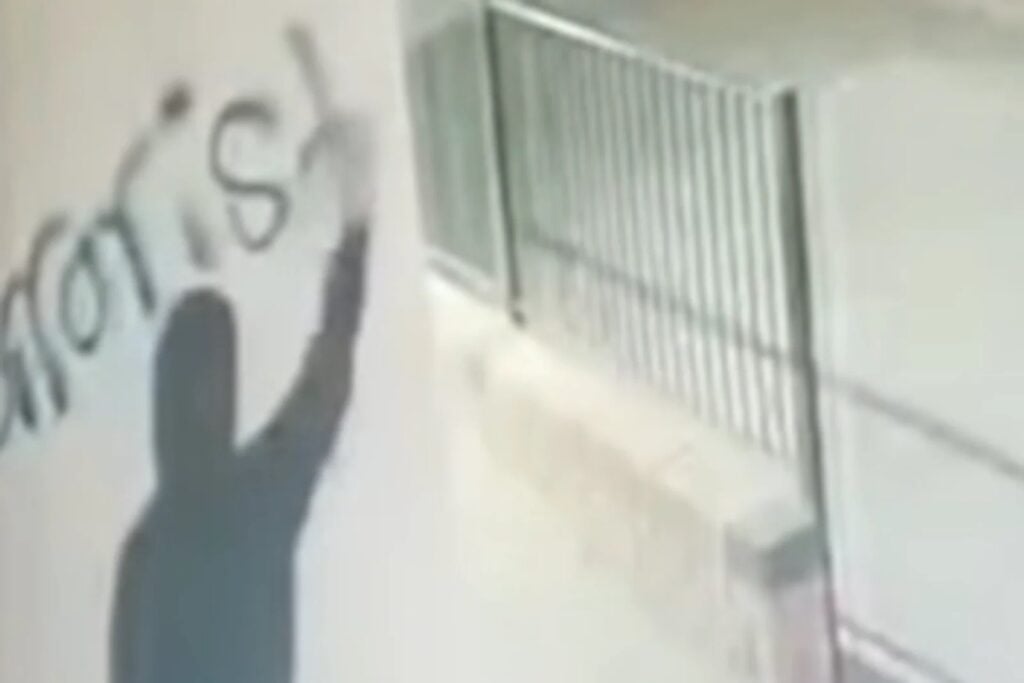
Officers are reviewing CCTV footage from the vicinity and conducting door-to-door enquiries in an effort to identify suspects. The police have also urged members of the public to check their own security cameras, dashcams or doorbell video systems for any footage that might assist the investigation.
Neighbourhood officers remain in regular contact with mosque leaders and worshippers to provide reassurance as the investigation continues, according to the force. The sustained police presence aims to deter further attacks whilst demonstrating support for the targeted community.
Faith institutions under pressure across Britain
The Birmingham attacks occur within a broader context of reported increases in hate crimes targeting religious institutions across the United Kingdom. Mosques, synagogues, gurdwaras and churches have all experienced vandalism, with some communities implementing enhanced security measures including CCTV systems and protective barriers.
The timing of attacks often correlates with international events or domestic political tensions, though the specific motivations behind the Kingstanding vandalism remain unclear pending investigation. What is evident is the psychological impact on congregations who must navigate heightened security concerns whilst attempting to maintain normal religious practice.
MPs’ warnings that community members feel unsafe accessing their own place of worship highlight the success of such intimidation tactics in disrupting daily life, regardless of whether physical harm occurs. The fear itself becomes a weapon that extends beyond the immediate damage caused by graffiti or broken windows.
Birmingham’s response and the challenge of prevention
Birmingham, as one of Britain’s most diverse cities, has long prided itself on interfaith cooperation and community cohesion. The Kingstanding attacks therefore carry particular symbolic weight, challenging narratives about the city’s ability to protect all its religious communities equally.
Local authorities face difficult questions about preventing repeat attacks when resources for round-the-clock security at every faith institution remain limited. The emergency meeting’s convening suggests recognition that standard police responses may prove insufficient without broader community engagement and prevention strategies.
Whether increased patrols can deter determined vandals remains uncertain, particularly if attacks occur during early morning hours when streets are largely deserted. The two-week gap between the window smashing and the first graffiti incident, followed by a second attack just 48 hours later, suggests perpetrators may be testing police response times and community vigilance.
What happens next for the investigation and community safety
The investigation continues, with West Midlands Police seeking witnesses and reviewing available footage. Success depends partly on whether CCTV coverage in the area captured usable images of the perpetrators, and whether members of the public come forward with information.
For the mosque community, immediate concerns centre on physical security improvements and maintaining congregation attendance despite the intimidation. Mr Hussein’s emphasis on unity suggests leaders are working to prevent fear from achieving what the vandals apparently intended – reducing the centre’s use and impact.
The police commitment to neighbourhood officer contact with mosque leadership indicates awareness that investigation alone will not restore community confidence. Visible policing presence, communication about investigation progress, and eventually arrests and convictions will all factor into whether worshippers regain their sense of security.
The emergency meeting’s outcomes, including any specific commitments from council and police representatives, will likely shape the community’s assessment of whether authorities are taking the situation sufficiently seriously. Without tangible progress – either in identifying perpetrators or implementing enhanced protective measures – anxiety is likely to persist.
Hate crime patterns and the challenge of prosecution
The classification of the vandalism as racially and religiously aggravated criminal damage carries implications for potential sentences if perpetrators are identified and convicted. Such aggravating factors typically result in enhanced punishment compared to ordinary criminal damage charges.
However, hate crime prosecutions require not only identifying those responsible but also proving their motivation stemmed from religious or racial prejudice. The explicit nature of the graffiti – “terrorists” painted on a mosque – provides clearer evidence of motivation than some hate incidents where intent proves harder to establish.
The challenge for police lies in translating community concern into investigative leads that identify specific individuals. Without witnesses, distinctive CCTV footage or forensic evidence, even serious hate crimes can prove difficult to solve, leaving communities feeling vulnerable and authorities frustrated by their inability to deliver justice.
