
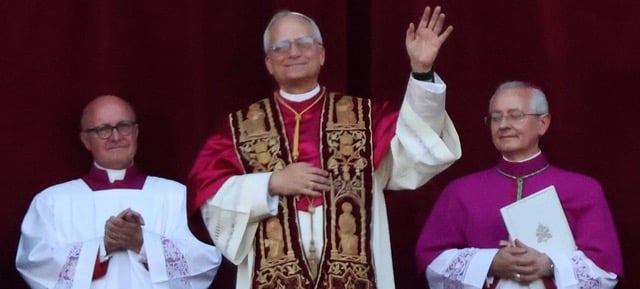
On a day traditionally devoted to messages of resurrection and hope, the world witnessed a stark collision between moral authority and military power as Pope Leo delivered his inaugural Easter address whilst President Donald Trump issued explosive threats to devastate Iranian infrastructure within 48 hours.
The divergent communications—one from St Peter’s Square calling for dialogue and disarmament, the other from Truth Social promising unprecedented destruction—encapsulate the deepening chasm between diplomatic restraint and aggressive confrontation as conflicts across two continents claim thousands of lives.
More than 3,500 people have died since American and Israeli forces struck Iran on 28 February, according to US-based rights monitor HRANA, with casualty figures continuing to climb as violence radiates across the Middle East. The grim statistics include 1,607 civilians and at least 244 children killed in the Iran theatre alone, whilst Israeli operations in Lebanon—launched following Tehran’s retaliatory response to the assassination of Supreme Leader Ayatollah Ali Khamenei—have claimed 1,368 lives, among them 124 children.
Against this backdrop of mounting human cost, the newly elevated pontiff used his first Easter Sunday appearance to condemn what he characterised as global indifference to mass death.
What the Pope Said From the Vatican Loggia
Addressing worshippers gathered at the Vatican, Pope Leo spoke directly to the phenomenon of desensitisation in an era of multiple simultaneous conflicts. His remarks pointedly referenced “the deaths of thousands of people” and “the repercussions of hatred and division that conflicts sow—to the economic and social consequences they produce.”
Whilst carefully avoiding naming specific wars, Leo invoked the words of his predecessor Pope Francis, who during his final public appearance from the same balcony last Easter had lamented “the great thirst for death, for killing, we witness each day.”
The Pope’s appeal carried particular urgency given the expanding geography of violence. Beyond the Iran-US-Israel confrontation now in its second month, attacks have struck Iranian installations, Israeli territory, American military bases, and Gulf state infrastructure. Israel’s ground invasion of Lebanon, initiated on 2 March after Hezbollah responded to Khamenei’s killing, has opened yet another front in an already sprawling conflict.
“Those who have weapons lay them down!” Leo urged. “Let those who have the power to unleash wars choose peace! Not a peace imposed by force, but through dialogue! Not with the desire to dominate others, but to encounter them!”
Why Religious Authority Now Confronts Political Power
The timing of Pope Leo’s intervention reflects mounting Vatican concern that the international community has normalised extraordinary levels of civilian death across multiple theatres. The pontiff’s reference to indifference suggests the Holy See believes the sheer volume of simultaneous conflicts—from the Middle East to Eastern Europe—has created a dangerous numbness to human suffering.
Russia’s invasion of Ukraine, now more than three years old, has generated casualty estimates ranging between 500,000 and 1.5 million killed or wounded, both military and civilian, since 24 February 2022. That the Pope felt compelled to address what he perceives as widespread apathy indicates concern that such staggering figures have lost their capacity to shock.
The Vatican’s message stands in deliberate contrast to the language employed by political leaders, particularly Trump’s Easter Sunday declaration on Truth Social. Posted within hours of the papal address, the American president’s message promised that “Tuesday will be Power Plant Day, and Bridge Day, all wrapped up in one, in Iran.”
“There will be nothing like it!!!” Trump wrote, before demanding: “Open the F**kin’ Strait, you crazy b*stards, or you’ll be living in Hell—JUST WATCH! Praise be to Allah.”
The profanity-laden ultimatum, which concludes with an incongruous Islamic invocation, sets a Tuesday deadline for Iran to reopen the Strait of Hormuz—extending by one day the 10-day deadline Trump had previously established on 26 March. That original timeframe was set to expire on Monday, though the president appears to have granted a brief extension whilst maintaining his threat of overwhelming force.
The Accelerating Cycle of Retaliation
The current crisis emerged from the joint American-Israeli operation on 28 February that killed Ayatollah Khamenei, prompting Iranian retaliation and counter-strikes that have since expanded to involve Hezbollah forces in Lebanon. Israeli Defence Forces launched their ground offensive into Lebanese territory on 2 March, creating a multi-front war that has drawn in regional actors and threatened crucial shipping lanes.
The Strait of Hormuz, through which approximately one-fifth of global oil supplies typically transit, has remained blocked since late February as Iran vowed to prevent “enemy” vessels from passage. Trump’s insistence on reopening the waterway reflects both strategic and economic imperatives, though his threat to combine infrastructure destruction with the maritime ultimatum signals an intent to impose terms through overwhelming military pressure rather than negotiation.
Lebanese authorities report that Israeli strikes since early March have devastated civilian infrastructure alongside military targets, with the child death toll alone exceeding 120. HRANA’s broader count of 244 children killed across the Iran theatre underscores the indiscriminate nature of modern warfare, where precision weaponry has not prevented mass civilian casualties.
Britain Caught Between Moral Voice and Strategic Reality
For the United Kingdom, the Pope’s Easter appeal and Trump’s simultaneous threats pose uncomfortable questions about London’s positioning in an increasingly polarised international landscape. Britain maintains both strong transatlantic ties and significant interests in Middle Eastern stability, whilst the Church of England’s traditional alignment with Vatican moral teaching creates additional pressures on government messaging.
The Archbishop of Canterbury has thus far avoided direct commentary on the Iran conflict, but Pope Leo’s intervention may compel Anglican leadership to articulate its own position on civilian casualties and the conduct of modern warfare. Any such statement would inevitably carry implications for Britain’s relationship with Washington, particularly if it echoes the Vatican’s call for dialogue over force.
British naval assets in the Gulf region face immediate operational challenges from the Strait of Hormuz closure, whilst UK energy markets remain vulnerable to disruptions in Persian Gulf oil flows. The government has yet to publicly address Trump’s threat to seize Iranian oil infrastructure—a prospect that would raise profound questions under international law and potentially require London to choose between supporting an ally and upholding legal frameworks governing territorial sovereignty.
As Tuesday’s deadline approaches, the contrast between the Pope’s Easter message of reconciliation and the American president’s promise of unprecedented destruction frames the central question facing the international community: whether the mounting death toll will prompt renewed diplomatic efforts, or whether global indifference has indeed become so entrenched that only further escalation lies ahead.
