


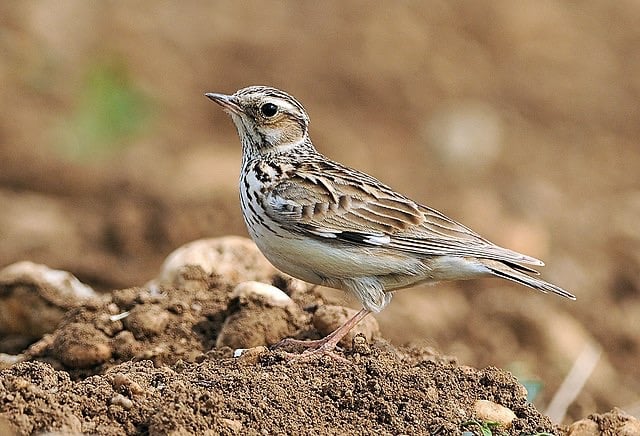
One of England’s most ecologically significant landscapes is entering its most sensitive time of year, and conservationists are calling on visitors to take extra care as ground-nesting birds begin to settle across the Wealden Heaths National Nature Reserve this spring.
Spanning 2,760 hectares across the Surrey and Hampshire border — roughly three times the size of Richmond Park — the reserve is home to some of Britain’s rarest wildlife. Nightjars, woodlarks and Dartford warblers all nest directly on the ground, often within touching distance of well-worn footpaths, making them acutely vulnerable to disturbance from walkers and their dogs during the breeding season, which runs from March through to September.
Wildlife managers are asking all visitors to keep to marked paths and ensure dogs remain on leads throughout that period. The appeal extends beyond birds: natterjack toads, adders and sand lizards — all rare heathland species — can also be harmed when people or animals stray from designated routes. As the gorse bursts into vivid yellow bloom and birdsong fills the air, the reserve offers a remarkable seasonal spectacle, but one that depends on thoughtful behaviour from those who come to enjoy it.
Stephen Rudd, principal manager for Natural England, described the Wealden Heaths as “a shining example” of what the King’s Series of National Nature Reserves aims to celebrate. “Small actions from all of us can make a huge difference,” he said, noting that England’s lowland heathland has declined by around 80 per cent over the past two centuries.
James Herd, director of reserves management at Surrey Wildlife Trust, echoed that message. “Ground-nesting birds like nightjars and woodlark are sensitive to disturbance,” he said, adding that the reserve serves not only as vital habitat but as “a place of recreation and pride for local people.”
With summer approaching, fire safety has also been raised as a concern. Rob Fairbanks, director of Surrey Hills National Landscape, urged visitors to leave barbecues at home, collect any litter, and dispose of smoking materials responsibly to reduce the risk of heathland fires.
The reserve was designated in 2024 as part of the King’s Series, a programme created to mark the Coronation of King Charles III, with the ambition of establishing 25 new or expanded National Nature Reserves across England by 2028. More than half of those sites have now been declared.
The programme reached a milestone on Thursday when King Charles III personally launched the new Seven Sisters National Nature Reserve, encompassing the chalk cliffs of Sussex, becoming the 13th site to receive the King’s endorsement. Collectively, the King’s Series now covers 17,000 hectares — twice the size of Brighton and Hove — with around 1.4 million people living within five kilometres of one of its reserves.
Wealden Heaths is managed by a partnership of nine organisations, including Natural England, the RSPB, the National Trust and Surrey Wildlife Trust.
